

Wanless IR, Bargman J, Oreopoulos D, Vas S. Subcapsular steatonecrosis of the liver in response to peritoneal insulin delivery: A clue to the pathogenesis of steatonecrosis in obesity. Modern Pathology 1989;2:69-74 (PDF available for download, see download page).
Click on photos to enlarge.
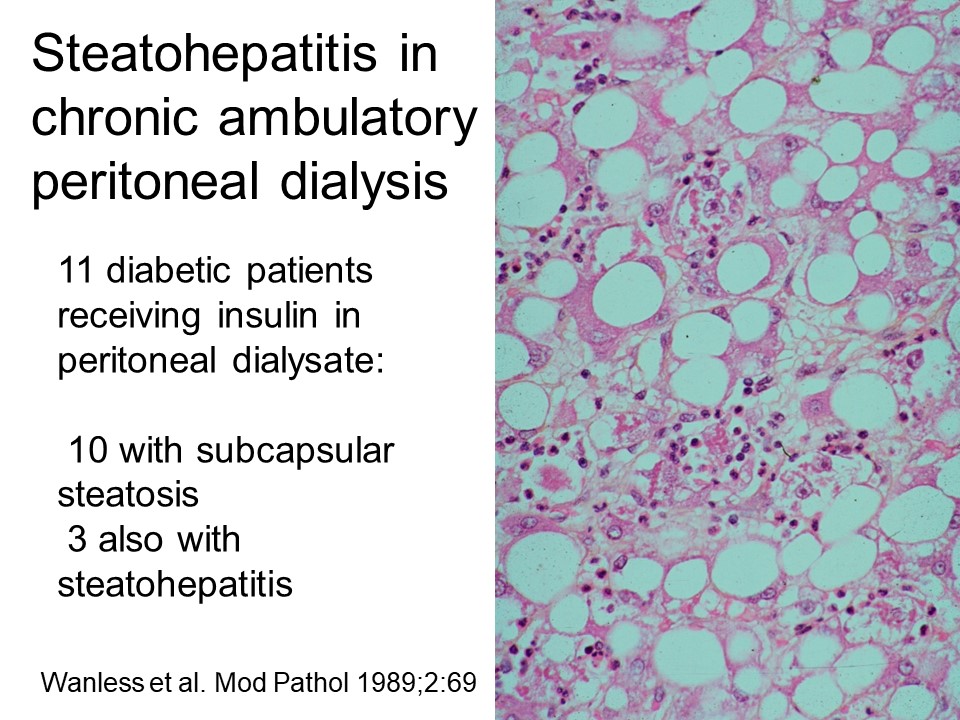
- Patients receiving intraperitoneal insulin therapy commonly develop subcapsular steatosis or steatohepatitis. The fatty lesions are confined to the most superficial subcapsular tissue.
- This data from 11 patients summarizes the prevalence of the lesions. The lesions often include ballooned hepatocytes with Mallory bodies and neutrophilic infiltration.
- The lesions can be explained by trans-capsular absorption of insulin, giving a local high insulin milieu. The insulin drains into the nearest subcapsular vein, causing a decrease in the insulin concentration in the deeper liver tissue.
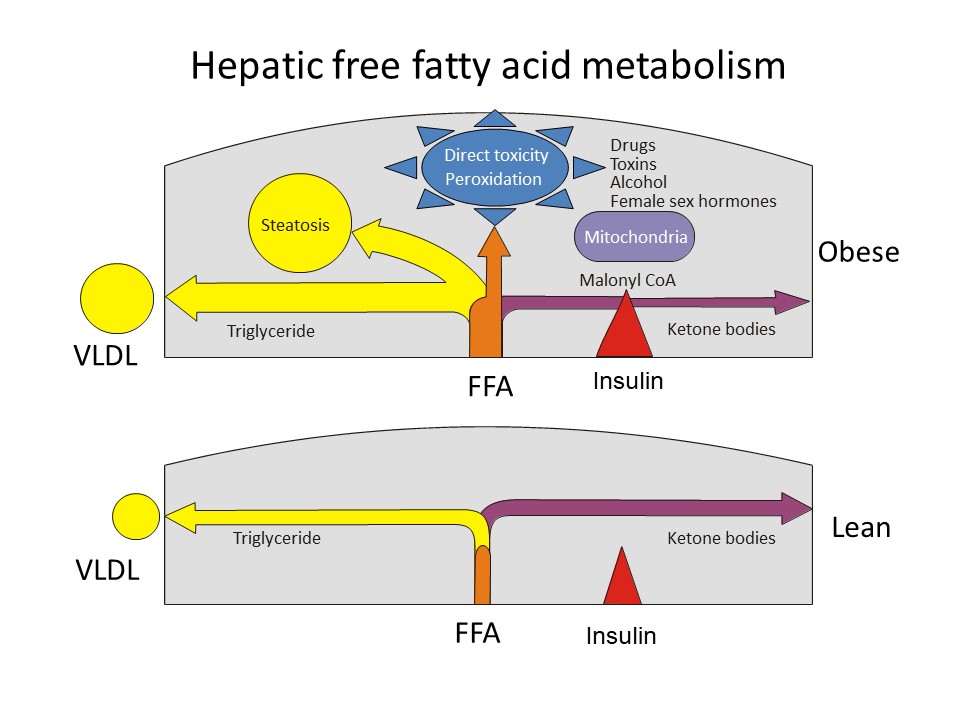
- The right panel summarizes the factors of free-fatty acid (FFA) load and insulin in lean and obese individuals. First there must be an elevated FFA substrate load. In the presence of high insulin, the FFA is transformed into triglycerides, some of which accumulates in hepatocytes and causes ballooning and necrosis with Mallory bodies. This mechanism is important because it applies to obesity-associated NASH, as well as this example of iatrogenic local high insulin levels in tissue.
This is the first study to implicate insulin in the pathogenesis of NASH.
 Ian R. Wanless